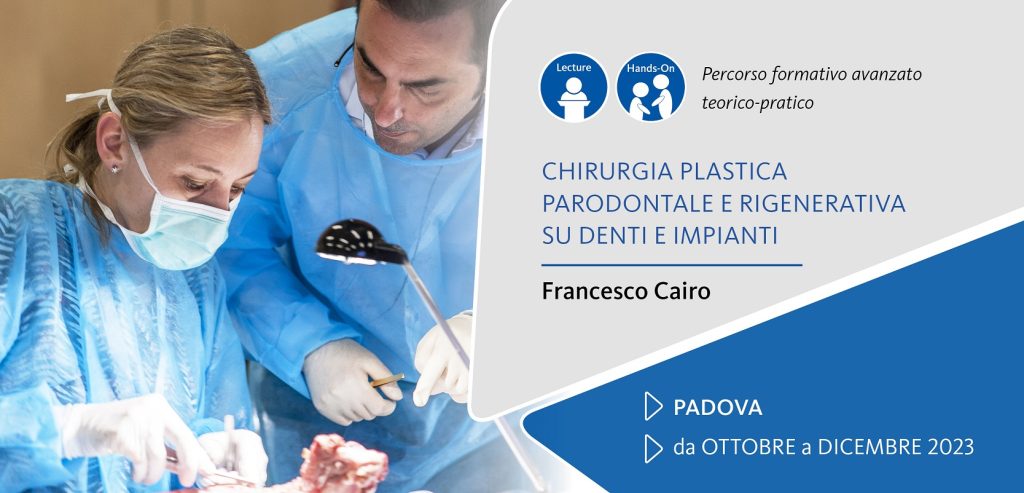
CHIRURGIA PLASTICA PARODONTALE E RIGENERATIVA SU DENTI E IMPIANTI
9a edizione
Questo corso avanzato si rivolge al clinico che vuole migliorare i risultati attesi nel trattamento delle problematiche estetiche e ricostruttive in Chirurgia Plastica Parodontale e Rigenerativa su denti e impianti.
È prevista la proiezione di video chirurgici al microscopio operatorio, esercitazione sui tessuti animali e/o simulatori e discussione di casi clinici.
L’impostazione del corso è sia tecnica (studio ed esecuzione step by step delle procedure) che scientifica (comprensione biologica delle scelte terapeutiche e analisi della letteratura scientifica correlata), al fine di migliorare sia le capacità clinico/chirurgiche sia la conoscenza scientifica per mezzo della letteratura internazionale più accreditata.
La protesi avvitata in implantologia
Le ricostruzioni protesiche su impianti possono essere ritenute sia tramite cementazione che tramite avvitamento. La scelta dell’opzione terapeutica nasce da alcuni aspetti fondamentali relativi alla occlusione, al carico, alla passivazione della struttura ed alla estetica, fattori tutti legati al posizionamento tridimensionale dell’impianto nell’osso e relativa successiva presenza dei fori d’accesso delle viti passanti di ritenzione protesica. La facilità di rimozione dei manufatti protesici in caso di complicanze tecniche gioca un ruolo fondamentale nella selezione della tipologia di ricostruzione. Vige una strana credenza che porta ad immaginare la protesi cementata come più semplice sulla base di alcune concezioni spesso solo miti da sfatare. Dall’introduzione del “Toronto Bridge” ad oggi nuovi protocolli terapeutici sono stati introdotti e soprattutto il miglioramento della componentistica dal punto di vista merceologico ha ottimizzato i risultati protesici negli anni. Le nuove componentistiche e relativo loro impiego, sia nelle metodiche di fusione che di produzione per CAD-CAM, richiedono conoscenze aggiornate anche per il clinico sia per quanto concerne l’incollaggio delle componenti sia per la selezione di fori inclinati e loro relativa angolazione, criticità sin troppo importanti per essere demandate completamente al laboratorio odontotecnico visto che anche i relativi profili di emergenza e volumi dentari andrebbero valutati con attenzione.
Le diverse connessioni implantari, specialmente quelle interne ed ancora di piu quelle ad angolazione conica frizionante e non, richiedono spesso di essere trasformate in flat aggiungendo nuova componentistica in un mare magnum di aziende e pilastri spesso compatibili e non originali con tutte le problematiche che ne possono possibilmente conseguire nel medio e lungo termine cosi come evidenziato statisticamente dalla letteratura scientifica. Importantissimo ai fini meccanici per la resistenza, cosi come biologici perl’interfaccia tra osso ed impianti è il disegno e la realizzazione dei cantilever dai quali non si può prescindere in protesi su impianti. In ultimo ma non per ultimo il controllo dell’occlusione che rappresenta la prova del nove prima di cominciare un “rodaggio su strada” della nostra protesi cosi confezionata e consegnata al paziente.
Scopo di questo incontro è valutare le sostanziali differenze tra la protesi avvitata e quella cementata e come siano cambiate negli anni con l’avvento delle nuove tecnologie. Ottenere la stabilita del giunto implanto-protesico attraverso la conoscenza della componentistica in uso partendo dai drivers, le viti di connessione, gli strumenti di avvitamento e le connessioni stesse è passaggio di fondamentale importanza per una materia non trattata in modo molto diffuso. Analizzare l’esame occlusale cosi come normalmente viene attuato alla luce delle vecchie conoscenze e delle nuove tecnologie per ottenere negli anni un risultato clinico più predicibile è un passaggio non trascurabile cosi come la valutazione dell’impatto delle tecnologie digitali sulla implanto-protesi. Il corso è rivolto e particolarmente suggerito a neofiti della materia cosi come ad utilizzatori di media esperienza alla ricerca di una revisione clinica e scientifica delle proprie conoscenze.
La componente culturale della protesi su impianti è fondamentale per la comprensione dello sviluppo corretto del piano di trattamento, della realizzazione pratica della parte clinica cosi come la comprensione delle eventuali complicanze che possono accadere sia in corso d’opera che nel breve, medio e lungo termine.

ON DEMAND COURSE – Maxillary Sinus: Golden Rules
Golden Rules and Clinical Principles to know for a safe approach to the Maxillary Sinus
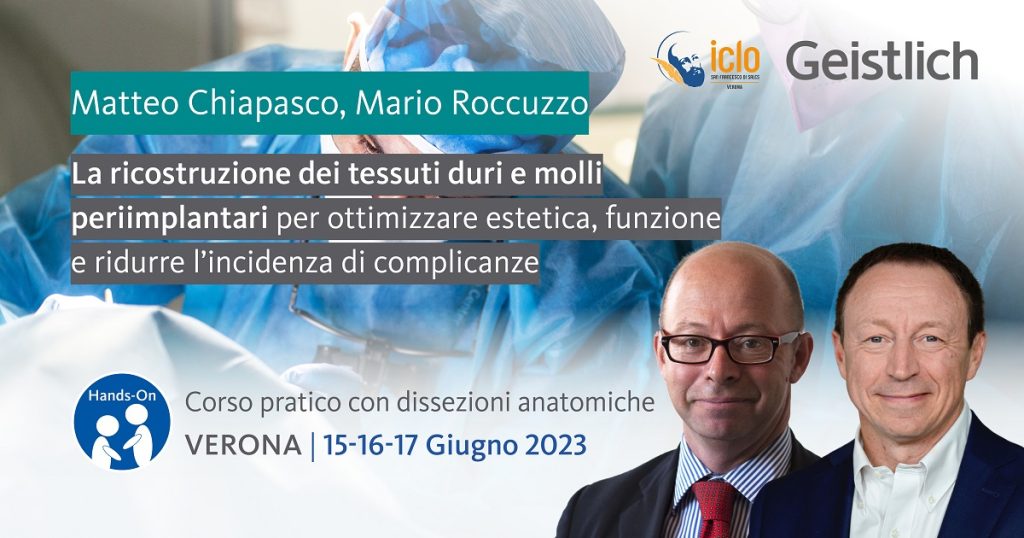
LA RICOSTRUZIONE DEI TESSUTI DURI E MOLLI PERIIMPLANTARI
Questo corso offre la possibilità unica di avere contemporaneamente, in qualità di docente, un esperto di fama internazionale di ricostruzioni ossee ed un altro di tecniche chirurgiche ricostruttive dei tessuti molli.
I docenti mostreranno in una parte teorico-pratica supportata da numerosi videofilmati le procedure chirurgiche di chirurgia pre e peri-implantare sui tessuti duri e molli, nonché alcune procedure di chirurgia mucogengivale. Nella parte pratica su cadavere mostreranno le varie procedure descritte nella parte teorica e insegneranno a identificare tutte le potenziali strutture anatomiche “a rischio” che possono essere incontrate durante gli interventi.
Subito dopo, i partecipanti potranno eseguire gli stessi esercizi con le loro mani sotto la diretta supervisione di docenti e tutors.
Real World Occlusion: It’s Not Just the Teeth
A dentist’s guide to function, esthetics and stability of the Maxillomandibular and Craniofacial Complex.
In most dental occlusal concepts, the primary difference is one of condylar versus muscular positions. This is consistent with the textbook images of sagittal condylar positions or the diamond shapes of the lateral excursive movements according to Posselt. However, these concepts do not take into account the three-dimensional structures of the craniofacial skeleton due to the relative difficulty of many dentists in visualizing how the muscles, TM Joints and the teeth all function in harmony. Risk indicators of occlusal disharmony include parafunction, trauma, posture, sleep architecture, psychological and neurologic inputs to the neuromuscular pathways. Finally, management of patient with Temporomandibular and Cranio-Cervical dysfunctions often require the use of intra-oral appliance therapy. Studies however have reported variable results.
Historical perspective suggests that different appliances and different mandibular positions be needed for different types of disorders and that the “one for all” appliance may not be an effective strategy to pursue.
Use of Artificial Intelligence in Dentistry- Current Trends
Discover how AI is transforming dental care already and what’s coming in the near future. Explore the various AI technology applications, current trends, and innovative solutions as we discuss its impact on patient education, case acceptance, practice efficiency, and even insurance reimbursement. Learn how AI is being used in diagnostic and monitoring settings in general dentistry, specialty dentistry, and health care as a whole to augment clinical decision-making and improve patient care. It’s the next step in digital dentistry, and is poised to become the industry standard.
Teaching Excellence Series: Dentistry
This study day covers a number of short presentations on a wide range of topic relating to excellence in dental education, most notably:
• Teaching excellent and professional recognition
• Reflective writing
• Curriculum ideologies in Dentistry
• Student satisfaction within a clinical environment
• Giving and receiving effective feedback
• Sustainability in Dental education
• Constructive alignment and standard setting
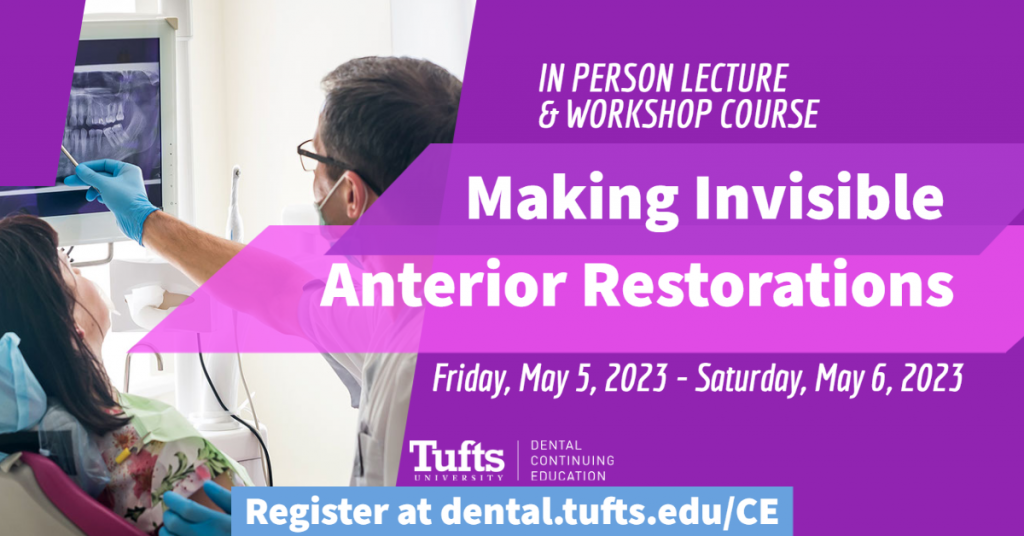
Making Invisible Anterior Restorations
The course consists of lectures and a special focus on hands-on model workshops. The course will provide comprehensive overview of esthetic considerations during restorative procedures. The course will teach how to select patients for crowns vs veneers in order to achieve predictable and reliable long-term outcomes. It focuses on single anterior restorations and what can be done in order to fabricate invisible restorations in anterior esthetic zones. The course will also teach both digital and analogue workflows.
Nitrous Oxide and Oxygen Sedation Competency Course
This course conforms to the American Dental Association (ADA) Guidelines for Teaching the Comprehensive Control of Anxiety and Pain in Dentistry. It is designed to meet the educational requirements for the nitrous oxide/oxygen inhalation sedation permit as promulgated by the Massachusetts Board of Registration in Dentistry. Participants will learn various techniques and protocols designed to achieve nitrous oxide/oxygen sedation through both lectures and hands-on clinical training. A patient-centered approach to care is emphasized with lectures on appropriate patient assessment/selection, medication selection, airway management, patient monitoring, and practical emergency management. Upon successful completion of a post-test, participants will receive the certification documentation of course completion.
Functional and Aesthetic Crown Lengthening Workshop
In addition to surgical management of soft tissue, crown lengthening procedures may involve osseous resective therapy. These hard and soft tissue alterations may be provided in order to obtain a ferrule height, establish a biologic width or for improved aesthetics. The morning portion of this program will be a lecture reviewing the rationale for crown lengthening therapy and a discussion on techniques for incisions, osseous therapy and suturing. Contraindications to crown lengthening will also be discussed.
In the afternoon section of the program, the workshop will utilize a posterior typodont to provide a practical exercise in exposing a maxillary premolar with a subgingival fracture. The participant will make incisions to gain access to the underlying bone. The participant will recontour the bone for predictable tooth exposure and eliminate moderate osseous deformities present on the typodont. In addition, a second typodont demonstrating altered passive eruption will be utilized for an aesthetic crown lengthening in the anterior sextant. The participant will make incisions recontouring the excess gingival tissue, resect bone, and suture the flaps for exposure of the anatomic crown for an aesthetic outcome.
The Do’s and Don’ts of Porcelain Laminate Veneers
Are you currently providing porcelain laminate veneers in your practice? Not having the esthetic success you hoped for?
This course will provide an introduction into what you should consider when incorporating veneers – treatment options, case presentations and a discussion of managing patients’ expectations. From planning and consideration of alternative approaches to execution, the necessary steps are presented, and many practice tips are provided, to help participants efficiently achieve desired clinical results. The hands-on session will include three different patient indications, the fabrication of temporary restorations, and proper techniques for cementation. This lecture and hands-on course will provide a comprehensive and a practical demonstration of how to execute porcelain laminate veneers, including the most common problems and how to avoid these mistakes in your dental office.
Digital Workflow for the Edentulous Patient: The Clinical Guide
This is an intensive 2-day course, which entails lectures, live surgery and hands-on provided by renowned leaders in full-arch implant dentistry. Focus is given on fundamentals of 3D implant planning and placement utilizing latest technology (software and hardware). The intensive course will provide the clinicians with state-of-the-art protocols and workflows for implant placement and rehabilitation for edentulous jaws and terminal dentition. The course includes principles and guidelines for immediate implant placement and loading protocols using the digital workflow, exposing the participants to different clinical scenarios they may face in everyday practice. At the end of the course, the participants should be knowledgeable on how to carefully plan and execute predictable full-arch implant rehabilitations.